The Rann Utsav photography tour is a dream experience for photographers, travel creators, Instagram enthusiasts, couples, families, and anyone who loves dramatic landscapes. During the winter season, the White Rann of Kutch transforms into a spectacular salt desert where changing sunlight, colourful traditional clothing, Kutchi culture, decorated bhungas, desert roads, and moonlit salt flats create extraordinary photography opportunities.
If you are planning a Rann Utsav photography tour 2026-27, this guide will help you choose the best photography locations, understand the ideal time for shooting, plan your itinerary, select accommodation, arrange transportation, and capture the unique beauty of Kutch.
Why Choose a Rann Utsav Photography Tour?
A Rann Utsav photography tour is different from a regular sightseeing trip because photography depends heavily on timing, light, location, weather, and flexibility.
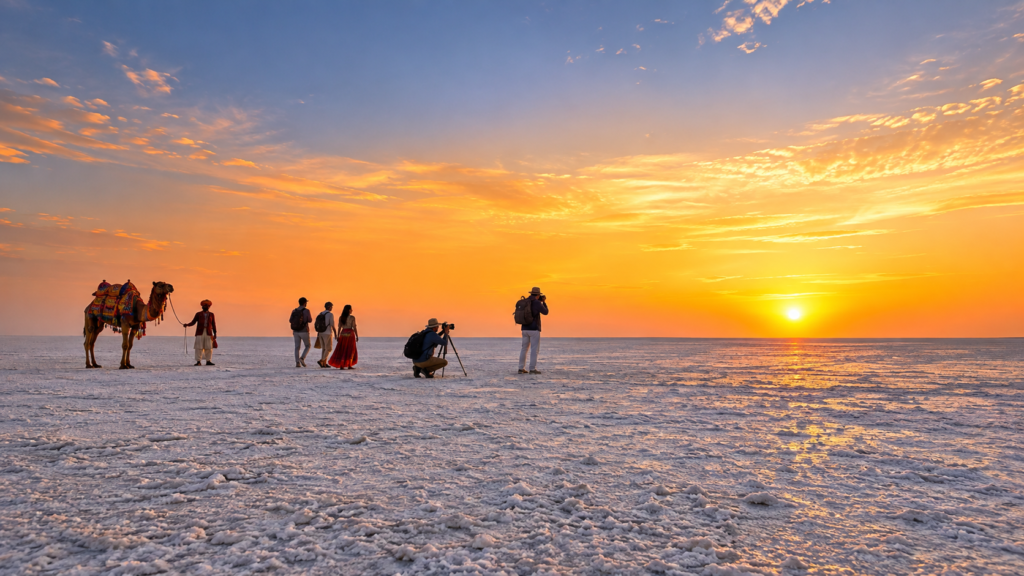
The White Rann provides an unusual natural canvas. During sunrise, the salt surface can take on soft golden tones, while sunset can create warm colours and dramatic silhouettes. On full-moon nights, the white landscape can appear completely different under the night sky.
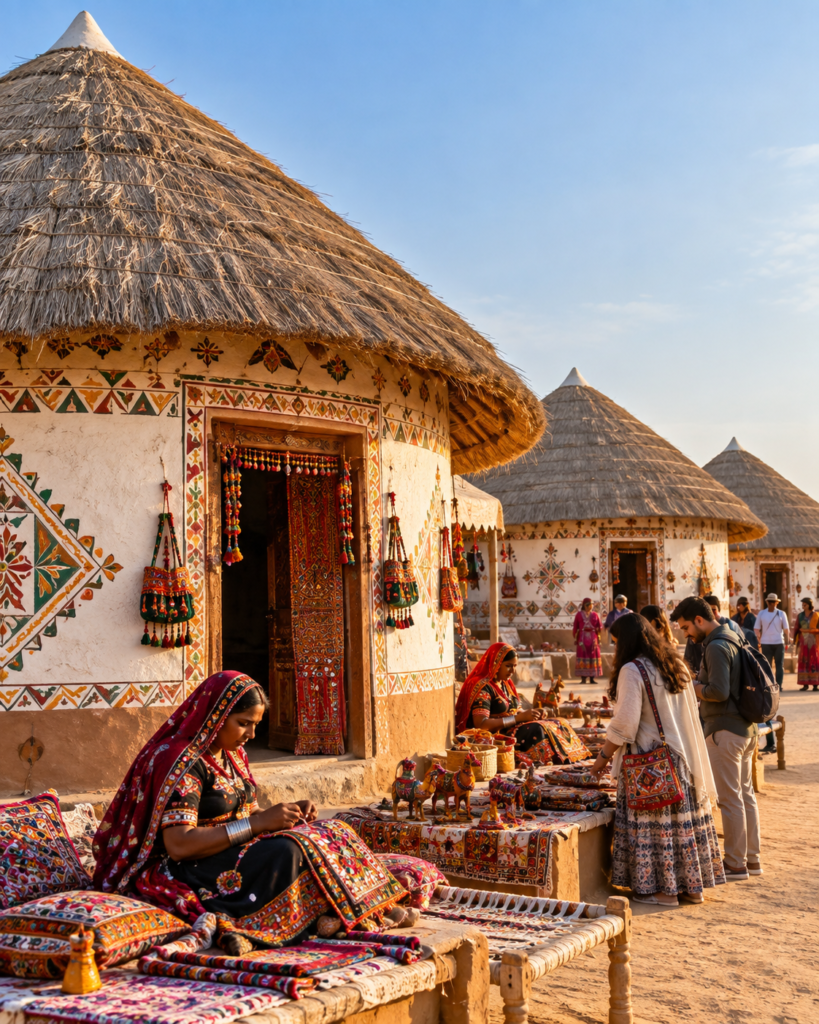
Photographers can also capture much more than the desert itself. A complete Rann Utsav photography tour can include traditional Kutchi villages, handicrafts, folk performances, colourful textiles, local food, decorated tents, camel carts, roads through salt flats, and portraits of local culture.
Best Photography Locations for Rann Utsav 2026-27
A successful Rann Utsav photography tour should include a mixture of landscapes, architecture, culture, people, and night photography.
| Photography Location | Best Photography Time | Best Subject |
|---|---|---|
| White Rann, Dhordo | Sunrise & Sunset | Salt desert landscapes |
| White Rann Full Moon | Night | Moonlit landscape |
| Road to Heaven | Morning/Sunset | Leading lines & landscapes |
| Kalo Dungar | Sunset | Panoramic Rann views |
| Dhordo | Day & Evening | Culture & architecture |
| Hodka | Morning/Evening | Bhungas & village life |
| Bhirandiyara | Day | Crafts & local culture |
| Dholavira | Morning/Sunset | Heritage & landscapes |
| Rann Utsav cultural area | Evening | Folk culture & performances |
| Mandvi | Sunset | Beach & coastal photography |
1. White Rann of Kutch
The White Rann is the star attraction of almost every Rann Utsav photography tour.
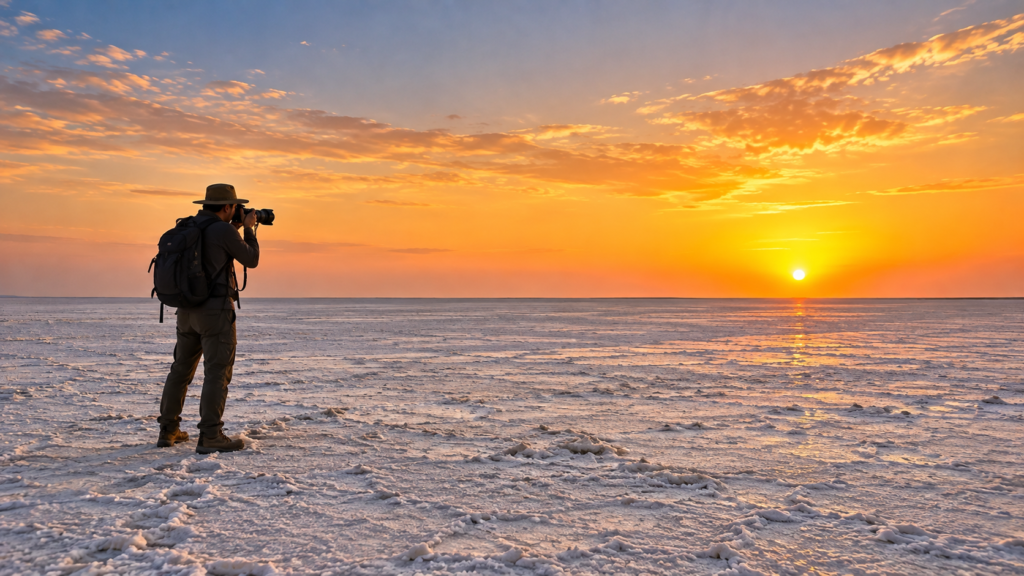
The endless salt landscape provides photographers with clean compositions, reflections, silhouettes, leading lines, minimalistic frames, and wide-angle landscape opportunities. The enormous open horizon also makes the White Rann excellent for creative portrait photography.
Try photographing the same location at different times of the day. The changing light can completely transform the appearance of the salt desert.
For official information about the Great Rann of Kutch, you can also refer to Gujarat Tourism – Great Rann of Kutch.
2. Road to Heaven
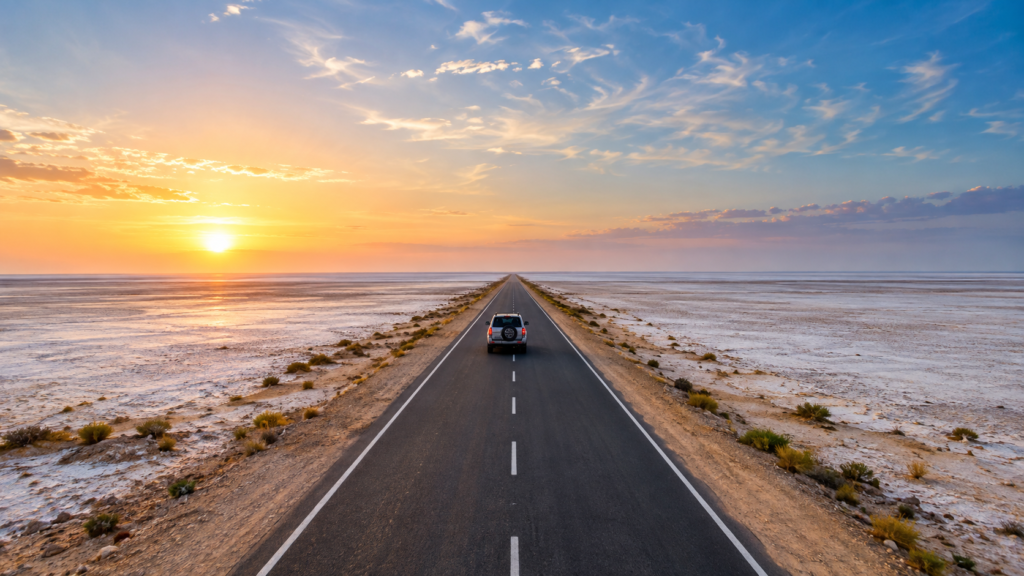
Road to Heaven is another excellent location for a Rann Utsav photography tour.
The long road cutting through the vast salt landscape naturally creates leading lines. A wide-angle lens can emphasize the road disappearing towards the horizon, while a telephoto lens can compress the landscape and create minimalist compositions.
The route towards Dholavira has also become popular for its striking salt-flat scenery. Gujarat Tourism describes the scenic route between Khavda and Dholavira as a landscape that offers strong photography opportunities.
3. Kalo Dungar
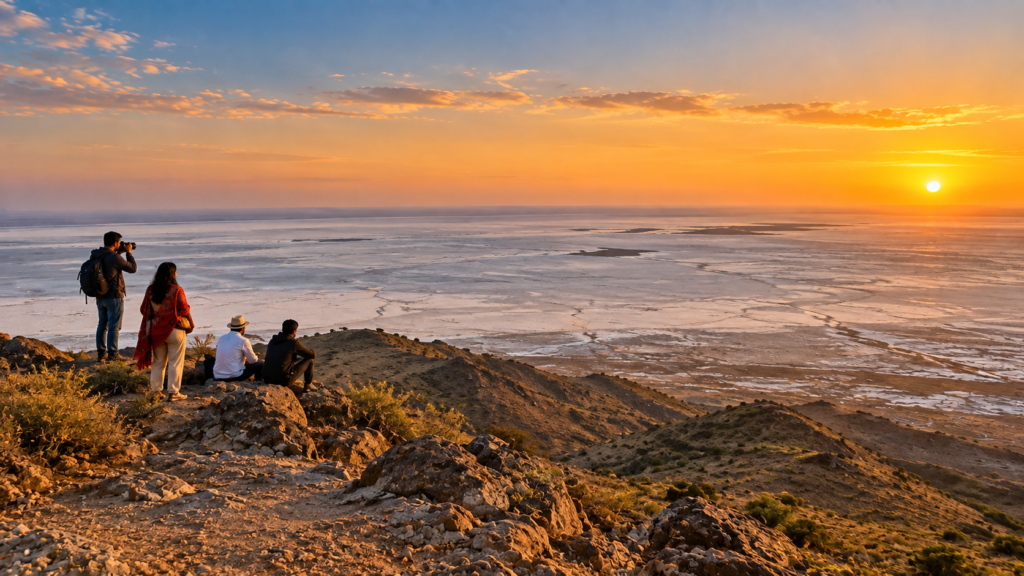
Kalo Dungar, or Black Hill, offers a completely different perspective for a Rann Utsav photography tour.
Instead of photographing the salt desert from ground level, you can photograph the vast Rann from an elevated viewpoint. The landscape stretching towards the horizon creates excellent panoramic compositions.
Kalo Dungar can also be combined with other northern Kutch attractions, making it a useful addition to a photography itinerary.
4. Dhordo and Kutchi Villages
Photography in Kutch should not be limited to landscapes.
Dhordo and surrounding villages provide opportunities to photograph traditional architecture, embroidery, textiles, handicrafts, local markets, cultural activities, and everyday village life.
When photographing people, always be respectful and ask for permission, particularly when taking close-up portraits.
5. Dholavira
Adding Dholavira to a Rann Utsav photography tour gives photographers an opportunity to move beyond festival photography and explore ancient heritage.
Dholavira is associated with the Harappan Civilization and offers archaeological structures, open landscapes, salt plains, and a quieter environment for photography.
The journey can also provide opportunities to photograph the distinctive landscape around the Road to Heaven and the wider Dholavira region.
Best Time for a Rann Utsav Photography Tour
Timing is one of the most important elements of a Rann Utsav photography tour.
Golden Hour
The period around sunrise and sunset is generally preferred by landscape photographers because softer directional light can add depth and texture.
For sunset photography, reach your location early rather than arriving at the last moment. This gives you enough time to choose a composition and prepare your equipment.
Full Moon Photography
A full-moon Rann Utsav photography tour can create a completely different experience.
The bright moon illuminates the salt landscape and can produce atmospheric night photographs. A tripod, remote shutter or timer, and appropriate camera settings are useful for long-exposure photography.
For 2026-27, published special dates include:
- 23–25 November 2026
- 22–24 December 2026
- 21–23 January 2027
- 19–20 February 2027
These dates come from the currently published Rann Utsav schedule.
Recommended Rann Utsav Photography Tour Itinerary
A 3-night / 4-day Rann Utsav photography tour provides a comfortable balance between photography and sightseeing.
Day 1 – Bhuj to Dhordo
Arrive in Bhuj and begin your journey towards Dhordo.
Depending on your arrival time, you can photograph:
- Bhuj landscapes
- Local architecture
- Craft villages
- Roadside Kutch scenery
- Dhordo village
- Rann Utsav cultural activities
Spend the evening photographing the festival atmosphere and preparing for the following day’s sunrise session.
Day 2 – White Rann Sunrise & Sunset
Start early for sunrise photography.
After sunrise, return for breakfast and take time to rest or explore nearby villages.
During the afternoon, prepare for the main sunset session at the White Rann.
This is one of the most important days of your Rann Utsav photography tour, so carry spare batteries, memory cards, and appropriate lenses.
Day 3 – Kalo Dungar, Road to Heaven & Villages
Begin with a photography drive towards Kalo Dungar.
Depending on the route and local access conditions, you can photograph:
- Desert roads
- Salt landscapes
- Kalo Dungar
- Local villages
- Handicrafts
- Traditional architecture
- Road to Heaven
Return towards your accommodation in the evening.
Day 4 – Dholavira or Bhuj Departure
If your schedule permits, add Dholavira to your itinerary.
Alternatively, return towards Bhuj and spend time photographing local markets, heritage buildings, handicrafts, and city life before departure.
For travellers wanting to extend their journey, Mandvi can also be added as a coastal photography destination.
Photography Equipment Checklist for Kutch
You do not need extremely expensive equipment for a successful Rann Utsav photography tour.
A basic setup can include:
- Mirrorless or DSLR camera
- Smartphone with a good camera
- Wide-angle lens
- Standard zoom lens
- Telephoto lens
- Tripod
- Spare batteries
- Extra memory cards
- Lens cleaning cloth
- Polarizing filter
- Neutral-density filter
- Power bank
- Camera bag
- Microfiber cloth
Salt, dust, and sand can affect camera equipment, so keep your gear protected when travelling between photography locations.
Photography Tips for the White Rann
The White Rann can be visually minimal, which makes composition especially important.
Use the following techniques during your Rann Utsav photography tour:
Use Leading Lines
Roads, footprints, fences, camel trails, and natural patterns can guide the viewer’s eye through your photograph.
Include a Human Subject
A person standing against the enormous white landscape can communicate the scale of the Rann.
Try Minimalist Photography
The White Rann is naturally suited to minimalist compositions. Use negative space to create clean and powerful photographs.
Photograph Local Culture
Do not focus only on landscapes. Traditional clothing, embroidery, handicrafts, musical performances, food, and village life can make your travel story more complete.
Experiment with Silhouettes
Sunset provides excellent opportunities to create silhouettes using people, camels, traditional structures, or other subjects.
Try Night Photography
During suitable moon phases and permitted access times, experiment with long exposures and moonlit landscapes.
Where to Stay During Your Photography Tour
For travellers looking for comfortable hotels and resorts, StayGuru Hotels & Resorts offers accommodation options across Kutch, including Bhuj and seasonal destinations around the Rann and Dholavira region. Staying closer to your photography locations can make early-morning and sunset photography sessions more convenient.
Why Private Transportation Helps Photographers
Transportation can make a major difference during a Rann Utsav photography tour.
Photographers may want to stop at scenic locations, spend extra time at sunset, return early for sunrise, or adjust their route based on weather and light.
A private cab gives you greater flexibility compared with a fixed group itinerary.
For Kutch taxi and cab bookings, Hariom Tours & Travels provides local transportation options for travellers exploring Bhuj, Dhordo, White Rann, Kalo Dungar, Dholavira, Mandvi, and other destinations across Kutch.
Plan Your Complete Kutch Photography Experience
A Rann Utsav photography tour can be combined with a wider Kutch itinerary.
Depending on the number of days available, consider adding:
- Bhuj heritage sightseeing
- Bhujodi handicraft village
- Nirona village
- Ajrakhpur
- Hodka
- Bhirandiyara
- Kalo Dungar
- Road to Heaven
- Dholavira
- Mandvi Beach
- Vijay Vilas Palace
- Mata no Madh
For more destination ideas, explore our Kutch travel guide and places to visit in Kutch.
If you are travelling from Surat, you can also explore our guide to a Kutch Tour Package from Surat.
For travellers interested in Dholavira, see our Dholavira travel guide.
You can also read our Kalo Dungar photography and travel guide and our Mandvi Beach & Vijay Vilas Palace guide before finalising your route.
Rann Utsav Photography Tour Booking with Kutch Tours and Travels
Planning a Rann Utsav photography tour becomes easier when accommodation, transportation, sightseeing, and timing are coordinated together.
Kutch Tours and Travels can help you plan a customised Kutch journey based on your photography interests, travel dates, group size, accommodation preference, and destinations.
Our local tour support can help you plan photography-focused routes covering the White Rann, Dhordo, Kalo Dungar, Road to Heaven, Dholavira, Bhuj, Mandvi, and other attractions.
For travellers who want specialist photography assistance, Kutch Tours and Travels also lists local guides with photography experience, including guides specialising in Kutch heritage, culture, photography, and wildlife photography.
Stay, Travel & Explore Kutch with AYO Hospitality
AYO Hospitality is the parent company behind a group of hospitality and travel services in Gujarat. StayGuru Hotels & Resorts provides accommodation across Kutch, Hariom Tours & Travels supports local cab and taxi travel, and Kutch Tours and Travels / AYO Vacation helps travellers plan customised tours and holiday experiences. Together, these services make it easier to coordinate your stay, transportation, and sightseeing across Kutch.
Frequently Asked Questions
What is the best time for a Rann Utsav photography tour?
The winter Rann Utsav season is generally the most suitable period for a Rann Utsav photography tour, especially from November through February. Published 2026-27 schedules extend into March 2027, so check the latest festival schedule before booking.
Which is the best photography location in Rann Utsav?
The White Rann near Dhordo is the primary landscape photography location. However, Road to Heaven, Kalo Dungar, Dhordo, Hodka, Dholavira, and local craft villages provide different photographic subjects.
Is a full moon good for Rann Utsav photography?
Yes. A full moon can illuminate the salt landscape and create excellent opportunities for night photography. Carry a tripod and check local access timings before planning a night shoot.
How many days are required for a Rann Utsav photography tour?
A minimum of 2 nights and 3 days can cover the major highlights, while 3 nights and 4 days provide more flexibility for sunrise, sunset, villages, Kalo Dungar, Road to Heaven, and Dholavira.
What camera should I carry for the White Rann?
A DSLR, mirrorless camera, or modern smartphone can work well. A wide-angle lens is useful for landscapes, while a standard zoom or telephoto lens provides more flexibility for portraits and distant subjects.
Can I hire a private cab for a photography tour?
Yes. A private cab can be useful because photographers often need flexible departure times and additional stops. Hariom Tours & Travels can assist with local Kutch cab and taxi requirements.

