
Kutch embroidery is one of Gujarat’s most recognisable traditional crafts, celebrated for its colourful threads, intricate stitches, decorative mirrors and distinctive patterns. For travellers visiting Kutch, shopping for traditional textiles is more than a retail experience. It is an opportunity to discover the region’s cultural heritage, meet skilled artisans and take home a piece of local craftsmanship.
Located in the western part of Gujarat, Kutch is famous for the White Rann, traditional villages, folk music, distinctive architecture and centuries-old handicraft traditions. While many visitors plan their trips around Rann Utsav, Bhuj, Dholavira and Mandvi, the region’s textile heritage offers another memorable experience.
From embroidered bags and cushion covers to traditional garments, dupattas, quilts and wall hangings, there is a wide range of products for different tastes and budgets.
However, not every colourful textile sold in a tourist market is handmade, and not every product labelled as traditional embroidery has been produced in the same way. Understanding the differences between embroidery styles, fabrics, craftsmanship and finishing can help you shop more confidently.
This Kutch embroidery buyer’s guide explains what to look for, where to explore textile traditions, how to assess quality and how to plan a rewarding craft-shopping experience.
2. What Makes Kutch Embroidery Special?
Kutchi embroidery reflects the artistic traditions of communities that have lived in and around Kutch for generations. Different communities have developed their own combinations of stitches, colours, motifs and decorative techniques.
Historically, embroidery has been used to decorate garments, household textiles and special occasion pieces. These textiles can also communicate cultural identity, personal expression and community heritage.
Several features make Kutchi embroidery distinctive:
- Detailed handwork: Traditional pieces may contain closely arranged stitches and carefully executed patterns.
- Colourful designs: Bright reds, greens, yellows, blues and contrasting threads are common in many styles.
- Mirror work: Small reflective pieces, often called shisha, may be incorporated into the embroidery.
- Geometric and natural motifs: Designs can include diamonds, flowers, animals and stylised forms.
- Regional variation: Embroidery techniques differ between communities and artisan groups.
- Contemporary applications: Traditional techniques are also used for modern clothing, bags, accessories and home décor.
The craft is not a single uniform style. Two embroidered pieces from different communities may look completely different, even when both are genuinely associated with Kutch.
For travellers, this diversity makes textile shopping especially interesting. Rather than purchasing the first attractive item, take time to understand the work and its origin.
3. Popular Types of Kutchi Embroidery
Kutch has several embroidery traditions. The following are useful styles to recognise when exploring artisan collections.
3.1 Rabari Embroidery
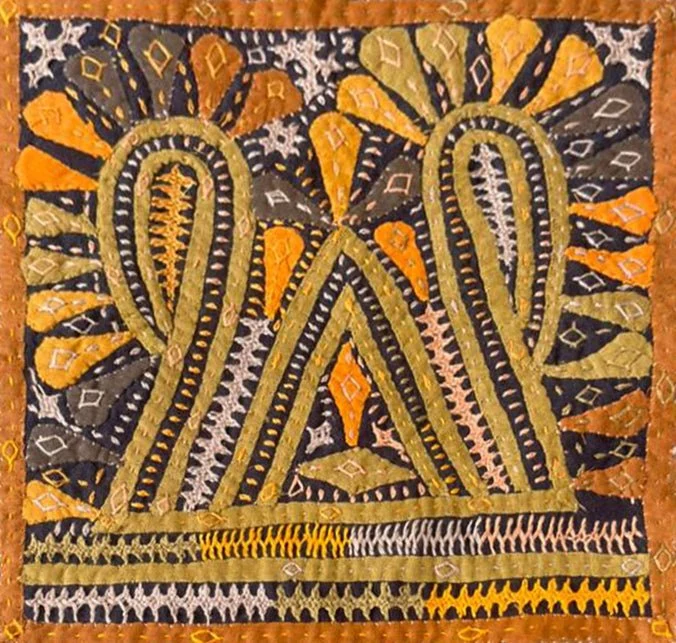
Rabari embroidery is associated with Rabari communities and is known for decorative stitching, colourful patterns and the use of mirrors in many traditional pieces.
You may find Rabari-inspired designs on bags, garments, cushion covers and wall hangings. Individual pieces vary according to the artisan, intended use and design.
Buying tip: Look at the placement of the mirrors, the consistency of the stitches and the finishing around the edges.
3.2 Ahir Embroidery
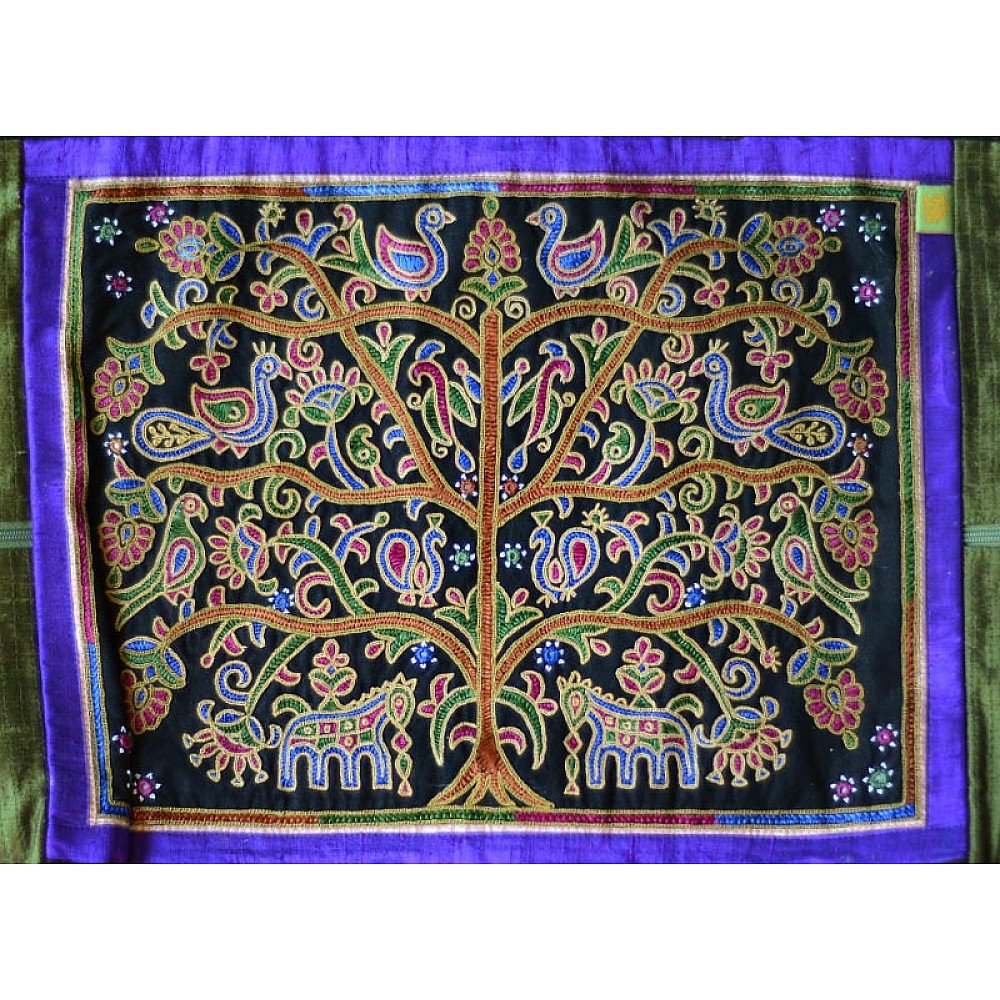
Ahir embroidery is recognised for its decorative patterns, floral forms and carefully arranged stitches. Mirror work may appear in some designs.
The finished products can be suitable for collectors, textile enthusiasts and travellers looking for distinctive handmade gifts.
Buying tip: Ask the seller or artisan to explain the design and whether the specific item is hand-embroidered.
3.3 Suf Embroidery
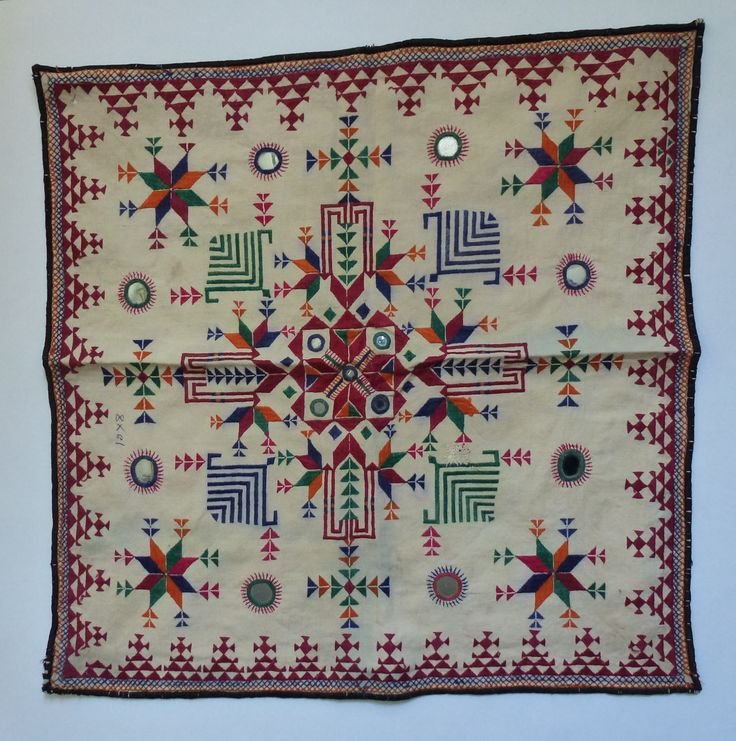
Suf embroidery is associated with geometric designs and a highly considered arrangement of patterns. Some traditional Suf work is created by counting threads and building the design through the stitchwork.
This can produce intricate geometric compositions that reward close inspection.
Buying tip: Examine the symmetry and precision of the pattern. Avoid assuming that every geometric embroidered design is Suf embroidery.
3.4 Pakko Embroidery
Pakko, also written as Pako, is known for dense, strong embroidery and decorative stitching. Some examples include mirror work and carefully outlined motifs.
It is worth exploring if you appreciate bold patterns and detailed surface decoration.
Buying tip: Check the reverse side of the fabric, where visible, for neat finishing and secure threads.
3.5 Mutwa Embroidery
Mutwa embroidery is associated with Mutwa communities and can feature fine stitching, intricate geometric arrangements and small mirrors.
Some pieces are particularly detailed, making them attractive to textile enthusiasts seeking finely worked designs.
Buying tip: Ask about the embroidery style and artisan group instead of relying only on the product’s colour or appearance.
3.6 Mochi Embroidery
Mochi embroidery is a traditional embroidery style associated with the Mochi community. It is known for fine, controlled needlework and detailed patterns.
When visiting specialist craft collections, look for examples that demonstrate the precision of the stitches.
Buying tip: Compare the quality of the stitching and the overall design before comparing prices.
4. Traditional Textiles and Handicrafts to Buy in Kutch
Kutchi embroidery is only one part of the region’s textile heritage. You can combine embroidery shopping with an exploration of other traditional crafts.
4.1 Ajrakh Block-Printed Textiles
Ajrakh is a traditional block-printing craft associated with Kutch and other parts of western India. It is known for complex patterns, repeated motifs and distinctive colour combinations.
Look for scarves, dupattas, fabric lengths, stoles and other textile products.
Best for: Clothing, thoughtful gifts and textile lovers.
4.2 Bandhani Textiles
Bandhani is a tie-dye technique in which sections of fabric are tied before dyeing to create patterns. The finished textile often displays distinctive dots and patterned arrangements.
You may find Bandhani dupattas, sarees, dress materials and other garments in regional markets.
Best for: Traditional clothing, festive wear and gifts.
4.3 Handwoven Textiles
Kutch has a weaving heritage that includes traditional woven fabrics and products made using different yarns and techniques.
Depending on the collection, you may find shawls, stoles, fabric pieces and home furnishings.
Best for: Practical souvenirs and people who appreciate textile craftsmanship.
4.4 Embroidered Bags and Accessories
Smaller embroidered products are convenient souvenirs for families, couples and group travellers.
Popular options include:
- Handbags and sling bags
- Pouches and wallets
- Key holders
- Small embroidered accessories
- Decorative textile pieces
Best for: Budget-conscious shoppers, colleagues and friends.
4.5 Home Décor and Collectible Textiles
If you have more luggage space, explore cushion covers, table runners, quilts, wall hangings and other decorative pieces.
These items can bring Kutchi colours and patterns into your home. Before buying larger products, check their weight, fabric, dimensions and care requirements.
Best for: Home décor enthusiasts and travellers looking for lasting souvenirs.
5. Best Places to Explore Kutch Embroidery
The best shopping experience may involve a combination of craft centres, artisan-led enterprises, textile workshops and local markets.
5.1 Living and Learning Design Centre, Ajrakhpur
The Living and Learning Design Centre (LLDC), established by Shrujan Trust, is a useful starting point for understanding the craft heritage of Kutch.
Its museum presents embroidery traditions from different Kutchi communities. The complex also supports craft-related learning and activities and includes a shop.
Why visit: It offers context about the craftsmanship and cultural traditions behind the textiles, helping visitors make more informed purchases.
Location: Ajrakhpur, on the Bhuj–Bhachau Highway, approximately 15 km from Bhuj.
The official visitor page lists opening hours of 10:00 AM to 6:00 PM, with last entry at 5:15 PM, and closures on Mondays and public holidays. Confirm the latest schedule, admission charges and availability before travelling.
5.2 Bhuj
Bhuj is a practical base for exploring the wider region and shopping for local crafts.
The city has markets and craft-related outlets where visitors can look for embroidered textiles, Bandhani, accessories and other regional products.
Why visit: Bhuj works well for travellers who want to combine shopping with local sightseeing and use the city as a base for day trips.
Ask about the origin and production method of each item rather than assuming every product in a market is locally handmade.
5.3 Bhujodi
Bhujodi is widely associated with Kutch’s textile and weaving traditions. It is worth considering for travellers interested in traditional fabrics, weaving and handmade products.
Why visit: It allows you to explore a different part of Kutch’s textile heritage alongside embroidery.
Confirm the location of the particular workshop or outlet you plan to visit, as products and visitor arrangements vary.
5.4 Sumrasar Sheikh
Sumrasar Sheikh is associated with Kala Raksha, an organisation dedicated to preserving traditional arts and supporting artisan livelihoods.
The organisation works with embroidery traditions and offers insight into the relationship between craft preservation, contemporary products and artisan participation.
Why visit: It is a valuable option for travellers interested in understanding traditional embroidery and the people who create it.
Contact the organisation before travelling to confirm visitor access, shop arrangements and current timings.
5.5 Nirona
Nirona is especially known for Rogan painting, along with other distinctive traditional crafts. Rogan painting is not embroidery; it is a separate technique involving the application of a prepared medium to fabric.
Why visit: Nirona makes a worthwhile addition to a wider Kutch craft tour, especially for visitors interested in traditional art and artisan demonstrations.
Choosing the Right Craft Stop
| Place | What to explore | Best suited for |
|---|---|---|
| Ajrakhpur LLDC | Embroidery heritage and craft displays | Learning and informed shopping |
| Bhuj | Markets and craft outlets | Convenient shopping and sightseeing |
| Bhujodi | Textiles and weaving traditions | Fabric enthusiasts |
| Sumrasar Sheikh | Embroidery and artisan-led craft work | Responsible craft shopping |
| Nirona | Rogan painting and other traditional crafts | A broader cultural experience |
Availability, opening times and visitor access can change. Confirm details directly before including specialist craft centres in a fixed itinerary.
6. What to Buy: A Category-Wise Shopping Guide
The right product depends on your budget, intended use and luggage space.
| Product | Why consider it | What to check |
|---|---|---|
| Embroidered pouch | Compact and easy to gift | Zips, lining and stitching |
| Handbag | Practical everyday souvenir | Strap strength and construction |
| Cushion cover | Adds traditional colour to home décor | Size, fabric and back closure |
| Dupatta or stole | Wearable textile souvenir | Fabric, colour and finishing |
| Embroidered wall hanging | Decorative and distinctive | Hanging arrangement and dimensions |
| Bandhani textile | Traditional tie-dye design | Fabric, dye and pattern quality |
| Ajrakh fabric | Detailed block-printed patterns | Print alignment and fabric quality |
| Collectible embroidery | Appreciated by textile enthusiasts | Provenance, technique and condition |
If you are buying several items for a family or group, compare similar products across more than one seller. Different prices may reflect the materials, amount of handwork, design complexity and seller’s business model.
7. How to Identify Authentic Handmade Embroidery
One of the most important parts of a Kutchi embroidery buyer’s guide is understanding how to assess a product without relying on appearance alone.
Check the stitching
Look closely at the front and, where possible, the reverse side. Handmade embroidery can show small variations, but the work should still be secure and suitable for its intended use.
Inspect the mirrors
Check that decorative mirrors are firmly attached and that the surrounding stitches are secure. Loose mirrors or sharp edges can reduce durability.
Ask about the technique
Ask whether the design is fully hand-embroidered, machine-embroidered, printed or a combination of techniques.
A printed imitation can resemble traditional embroidery from a distance, so examine the surface closely.
Understand the fabric
Ask about the base fabric and how it should be cleaned. Different textiles may require different washing and storage methods.
Ask about the artisan or community
A knowledgeable seller may be able to explain the style, artisan group, production process or source of the item. Not every product has a documented individual artisan, so do not expect the same level of provenance for every purchase.
Compare value, not just price
Intricate handwork can take considerable time. Extremely low prices should prompt questions about the production method, but price alone cannot prove whether a piece is authentic.
Request a receipt
For expensive purchases, request an itemised receipt and written details of any material or provenance claims that matter to you.
8. Best Time to Shop for Kutchi Textiles
Textile shopping is possible throughout the year, but your overall travel experience will depend on the weather, your itinerary and the opening arrangements of individual craft centres.
| Period | General travel considerations | Shopping advice |
|---|---|---|
| November–February | Generally popular for exploring Kutch’s desert attractions and cultural experiences | Combine craft visits with a wider Kutch itinerary |
| March–June | Hot weather can make outdoor sightseeing tiring | Plan indoor craft visits around the hottest part of the day |
| July–October | Monsoon conditions may affect road journeys and outdoor plans | Check local weather and transport conditions before departure |
The winter season is often convenient for combining Bhuj, artisan villages and the White Rann. However, a textile visit does not depend on attending Rann Utsav.
During festival periods, accommodation and transport demand can rise. Reserve your stay and transport in advance if your travel dates are fixed.
Craft centre schedules, workshop access and special exhibitions should always be confirmed independently.
9. Things to Do During a Kutchi Textile Shopping Tour
Make the experience about more than purchasing souvenirs.
- Observe the craftsmanship: Learn about the stitches, printing methods and materials used in traditional textiles.
- Visit a craft museum: Explore exhibitions to understand how different communities have developed their craft traditions.
- Speak with artisans where possible: Ask respectful questions about the process, design and time involved.
- Explore local markets: Compare designs and products before making a purchase.
- Combine different crafts: Discover embroidery, Ajrakh, Bandhani, weaving and Rogan painting during the same trip.
- Photograph responsibly: Ask permission before photographing artisans, workshops or people at work.
- Support responsible craft businesses: Consider purchasing from artisan-led organisations or sellers who can explain how their products are made.
If you are travelling with children, a craft-focused visit can also be an educational opportunity to learn about local culture, materials and traditional skills.
10. Practical Shopping Tips for Travellers
Before purchasing Kutchi embroidery or traditional textiles, keep these practical recommendations in mind.
- Set a shopping budget: Decide how much you want to spend on souvenirs, clothing and collectible pieces.
- Compare similar products: Check the fabric, stitch quality, size and finishing before comparing prices.
- Ask about washing instructions: Some embroidered textiles need gentle handwashing or professional cleaning.
- Protect delicate purchases: Carry fragile mirrors, embellished garments and valuable textiles carefully.
- Check dimensions: Measure larger pieces such as wall hangings and cushion covers before purchasing.
- Carry suitable luggage: Leave extra space if you plan to buy garments, quilts or multiple fabric pieces.
- Respect local customs: Ask permission before taking photographs or entering private homes and workshops.
- Keep receipts: Receipts are useful for exchanges, purchase records and expensive items.
- Confirm payment options: Do not assume every artisan workshop accepts digital payments or cards.
- Avoid rushed shopping: Give yourself enough time to compare designs and learn about the craftsmanship.
A meaningful souvenir does not have to be expensive. A carefully chosen handmade pouch, textile accessory or small embroidered piece can be a wonderful reminder of your journey.
11. Suggested 2-Day Kutch Craft and Textile Itinerary
If traditional textiles are your main interest, consider a dedicated craft-focused trip based in Bhuj.
Day 1: Embroidery, Textiles and Ajrakh
Morning: Explore Bhuj
Arrive in Bhuj and check into your accommodation. Depending on your arrival time, explore local markets and identify the types of textiles you would like to purchase.
Late morning: Visit LLDC, Ajrakhpur
Learn about Kutchi embroidery traditions through the Living and Learning Design Centre. If its visitor facilities and shop are open, allow time to explore the displays and browse craft products.
Afternoon: Explore Ajrakh textiles
Visit Ajrakhpur’s block-printing craft area. Where workshops welcome visitors, learn about block printing and browse fabrics, scarves and other textile products.
Evening: Return to Bhuj
Enjoy dinner and organise your purchases. Keep receipts and store delicate items safely.
Overnight stay: Bhuj.
Day 2: Weaving, Artisan Crafts and Local Shopping
Morning: Visit Bhujodi
Explore traditional weaving and textile products. Depending on the workshops open during your visit, you may be able to see weaving demonstrations and browse shawls, stoles and fabrics.
Afternoon: Choose a craft experience
If time and road conditions permit, consider visiting Nirona for Rogan painting, copper-bell making and lacquer work. Alternatively, explore another embroidery-focused outlet or craft organisation.
Late afternoon: Return to Bhuj
Complete your shopping and prepare for departure.
This itinerary is flexible. Workshop visits should be arranged in advance, and it is better to explore two or three places properly than rush between too many destinations.
For a wider sightseeing experience, extend your trip to include Dhordo and the White Rann, Mandvi or Dholavira.
12. Where to Stay During Your Kutch Trip
Your choice of accommodation depends on your itinerary. For a craft-focused trip, Bhuj is a practical base because it provides access to city shopping and several nearby craft destinations.
AYO Hospitality Private Limited connects hospitality and travel services through its accommodation and travel brands. Travellers can compare the following StayGuru options and confirm which property best matches their plans.
Accommodation Options to Conside
StayGuru Hariom Residency
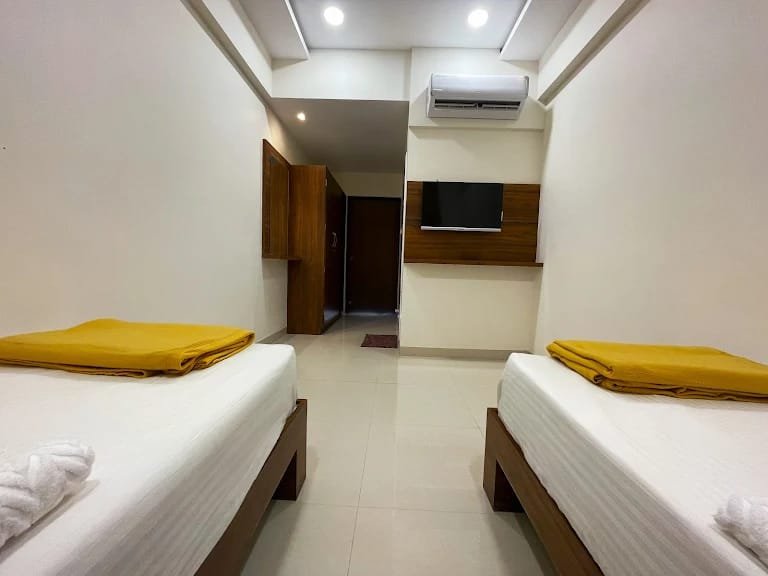
Another Bhuj accommodation option to compare for a city-based itinerary. Confirm availability, room arrangements and included services before booking.
StayGuru Park View Residency
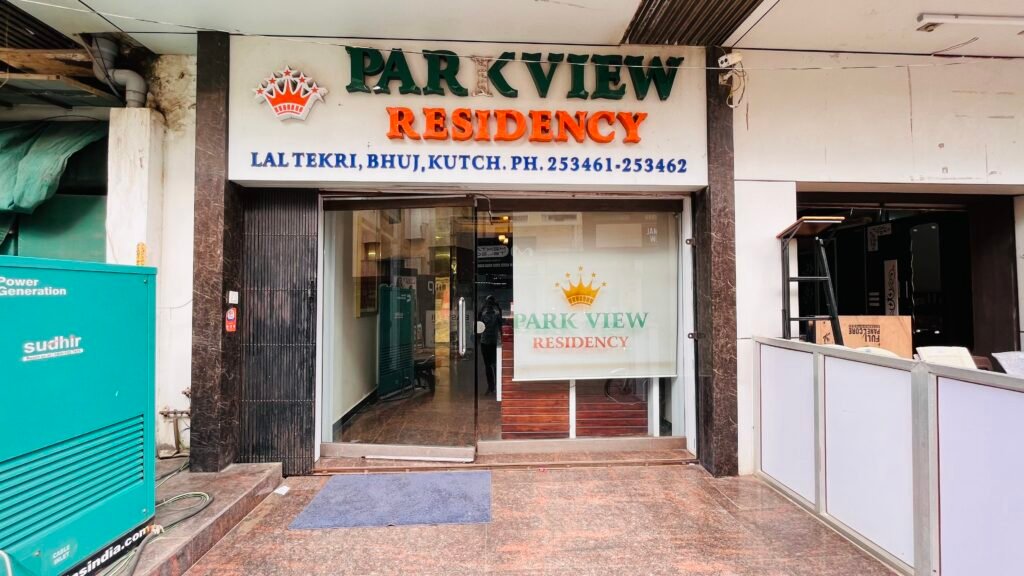
Consider this property when comparing room options for a visit to Bhuj. Check current facilities, rates and the location in relation to your planned sightseeing route.
StayGuru Hotel Atithi

An additional option for travellers looking for a hotel in Bhuj. Confirm the room category and booking terms that suit your group.
StayGuru Resort Farm Villa
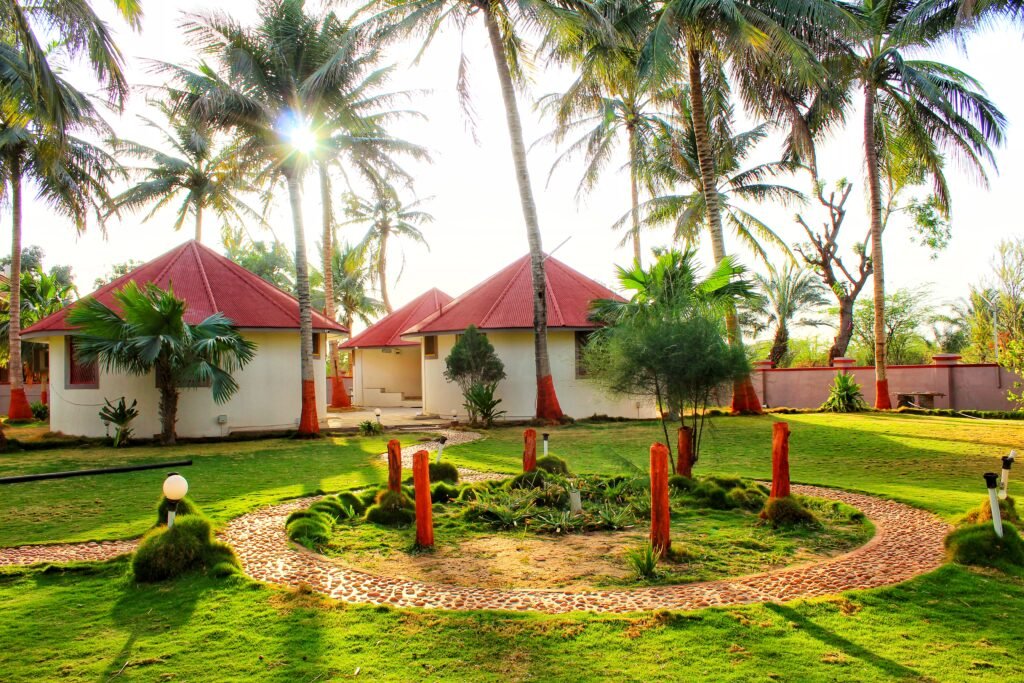
This property offers a resort-style accommodation option near Bhuj. Its published amenities include a swimming pool, dining facilities, parking and Wi-Fi. Verify current availability and individual facilities before confirming your stay.
Other accommodation options
For Palm Glow Resort, Plumeria Hotel and Kutch Shahi Haveli, confirm the current property location, room availability and amenities directly before selecting them for your itinerary.
If you plan to visit Dhordo or Dholavira, consider accommodation closer to those destinations instead of travelling back to Bhuj every night.
13. Transportation and Tour Planning
Kutch’s craft villages and sightseeing attractions are spread across a large area. Planning transport in advance makes it easier to visit artisan workshops without rushing.
Travelling to Bhuj
Travellers can plan their journey to Bhuj by road, train or air, depending on their starting city and available connections. Check current schedules before booking.
Local Sightseeing by Taxi or Cab
A private cab is useful when you want to combine Bhuj, Bhujodi, Ajrakhpur and Nirona in one itinerary. It gives you more flexibility to spend time at workshops and adjust your route according to opening hours.
Hariom Tours & Travels provides a travel-planning resource for taxi and cab services. Enquire about local sightseeing, airport and railway station transfers, and outstation journeys.
Confirm the vehicle type, total fare, waiting charges, sightseeing route and any additional expenses before finalising a booking.
Plan Your Trip with Kutch Tours & Travels
Kutch Tours & Travels can help travellers explore Kutch through tour-package and itinerary-planning options.
You can enquire about a customised itinerary that combines traditional textiles with destinations such as Bhuj, the White Rann, Dhordo, Mandvi and Dholavira.
For a craft-focused visit, request sufficient time for artisan workshops and local shopping rather than choosing an itinerary based only on major tourist attractions.
AYO Hospitality Private Limited brings accommodation and travel services together, allowing travellers to explore suitable options for their overall journey.
Frequently Asked Questions
Q1. What is Kutch embroidery famous for?
Kutch embroidery is famous for colourful threadwork, intricate stitches, mirror work and distinctive patterns associated with different artisan communities. Its styles vary according to regional traditions and the techniques used.
Q2. Where can I buy authentic Kutchi embroidery?
You can explore craft centres, artisan-led organisations, specialist textile outlets and local markets in and around Bhuj. Ajrakhpur is also worth visiting for textile printing, while Bhujodi is associated with weaving. Confirm the origin and production method of individual products before buying.
Q3. Is Kutchi embroidery handmade?
Traditional Kutchi embroidery is produced by hand, but products sold in the market may use hand embroidery, machine embroidery, printed designs or a combination of techniques. Ask the seller about the specific product’s production method.
Q4. What is the difference between Kutchi embroidery and Ajrakh?
Kutchi embroidery involves stitching decorative designs onto fabric. Ajrakh is a traditional block-printing technique used to create patterns on textiles. Both are important parts of the craft heritage associated with Kutch, but their production methods are different.
Q5. Which village is best for textile shopping in Kutch?
The best destination depends on the craft you want to explore. Bhujodi is associated with weaving, Ajrakhpur with block printing, and Bhuj offers access to markets and craft outlets. LLDC in Ajrakhpur is useful for learning about embroidery traditions.
Q6. What is the best time to visit Kutch for handicraft shopping?
November to February is a popular period for exploring Kutch because travellers can combine craft visits with the White Rann and other seasonal attractions. However, textile shopping can be planned throughout the year. Check the weather and individual workshop schedules before travelling.
Q7. How can I identify good-quality Kutchi embroidery?
Inspect the stitching, mirror attachments, fabric, finishing and overall construction. Ask about the technique and artisan attribution, where available. Compare similar products and request a receipt for expensive purchases.

